ZuluTrade · hired as a junior, then handed a global trading platform to redesign alone
I was hired as a junior. A month later the senior designer left, and I was the only designer on a global trading platform. I built its first design system from scratch, led its crypto and white-label partnerships, and redesigned account opening around a verification step the law would not let me remove.
Scope
At a glance
I was hired at ZuluTrade as a junior designer. In my first month, the senior designer told me he had found another job. By the end of my onboarding, the person who was meant to teach me the product had gone, and I was the only designer on it.
I had been using Figma daily for about a year. Not long. I was junior in the honest sense of the word, still learning the tool while being handed a global trading platform to redesign. What followed was the hardest and most under-resourced stretch of my career, and the one that taught me the most. I studied the way you study at university, on my own, because there was no one in the building to ask.
What I inherited
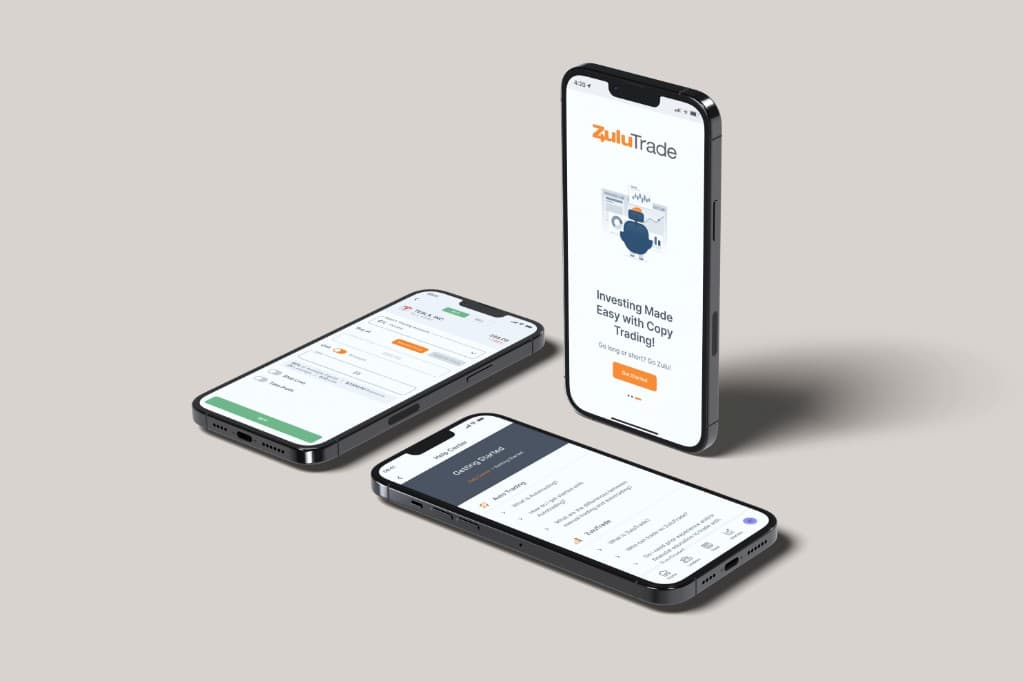
ZuluTrade is a global social trading platform. People copy the trades of signal providers, manage portfolios, and follow each other, all in one place. The product was powerful. The design had not kept up with it.
There was no design system. There were colour styles, and that was the extent of it. No variables, because Figma variables did not exist yet. No semantic naming, no components with real structure, no documentation. No user stories, no scenarios, no maps of what anyone was trying to build. The company wanted to redesign everything, the web platform, the website, and the mobile app, and there was no record of what any of it was supposed to do. So "from scratch" was not a figure of speech. It was the actual state of the file.
Before the redesign, the partners
The redesign did not come first. The partnerships did.
For the first six months, most of my work was making ZuluTrade fit other companies. There was a crypto integration with Capital Wallet, to bring crypto trading inside the platform, and there was a run of white-label deals, where outside companies wanted ZuluTrade rebuilt in their own brand. I was leading that work, with a designer more junior than me, and coordinating with teams outside the company who each wanted something slightly different. Junior on paper, running partner integrations in practice.
White-label is where I learned to say no to a client and have them agree with me. The job was to tell each partner what they could change, what they could not, and what they should change even though they had not asked. One company arrived with two brand colours, green and red. On a trading product, green and red are already taken. They mean you made money, and you lost money. Turn them into your brand and the user can no longer tell a brand accent from a profit or a loss. So I held the functional palette, kept the dark accent we already had, and moved their brand expression somewhere it would not collide with the data. That was the argument, and they accepted it, because it was about their users and not my preference.
The step I could not design away
When the platform redesign finally started, I did the unglamorous half of design first. I studied the current product, read the data, and mapped where it was leaking. The UX was old, and a lot of the trouble sat in one place: opening an account.
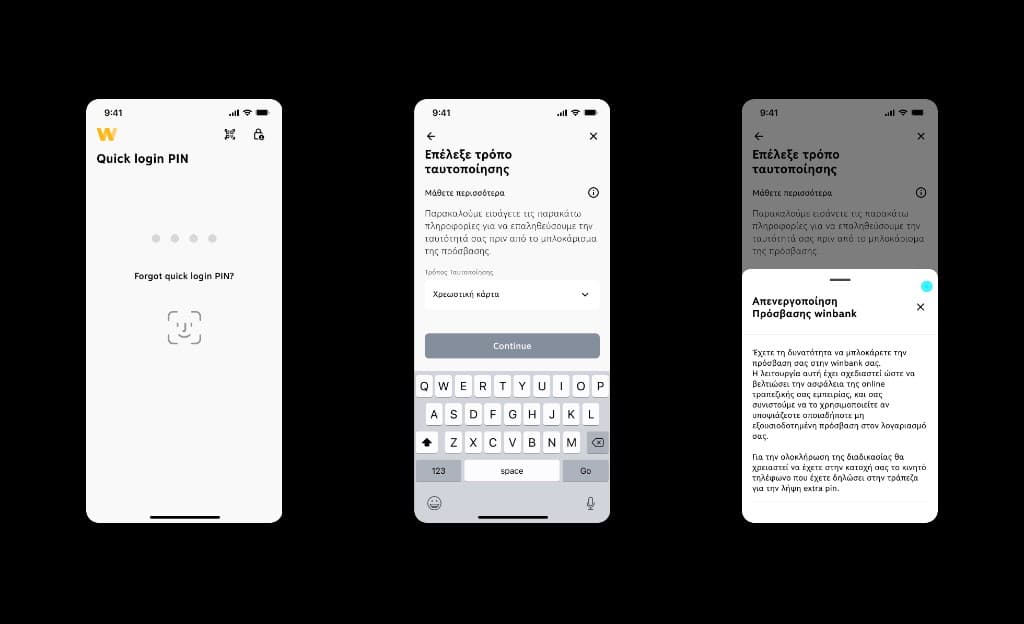
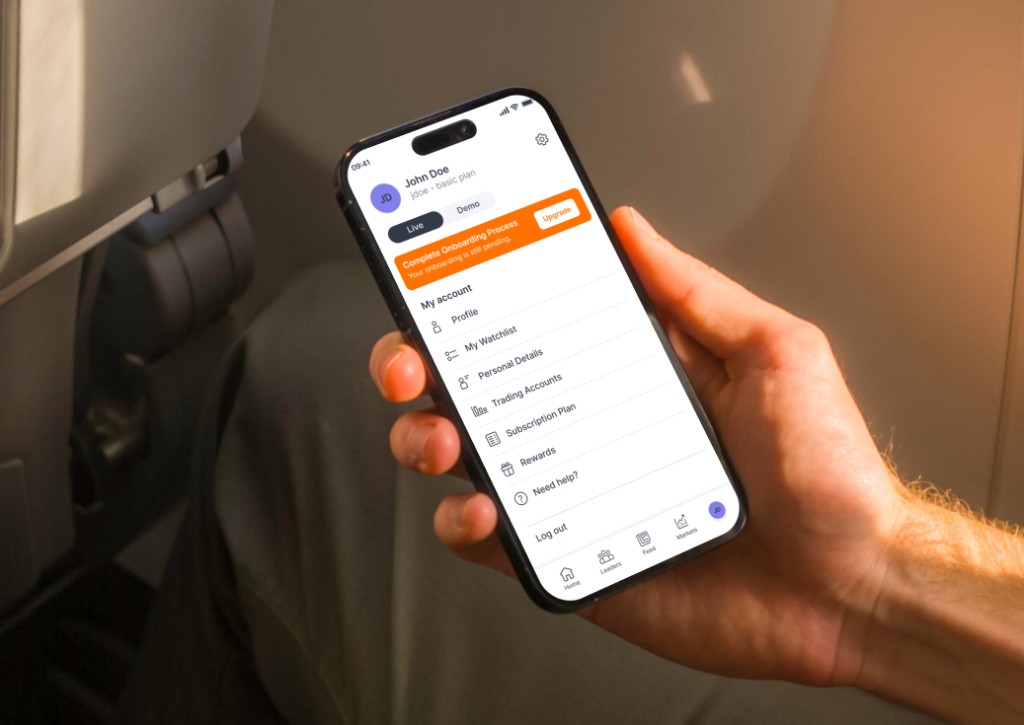
Trading platforms in Greece and across Europe are regulated. To open an account, the law requires identity verification, and that verification ran through a third-party integration I did not own and could not remove. The moment the user crossed into it, the screen stopped looking like ZuluTrade, and their confidence went with it. I could not delete the step, because it was the law. So the real problem was not "fix onboarding." It was to hold the user across a boundary I did not control, and make a compliance step feel like part of the product instead of the moment it handed them to a stranger.
Building the system while learning what a system was
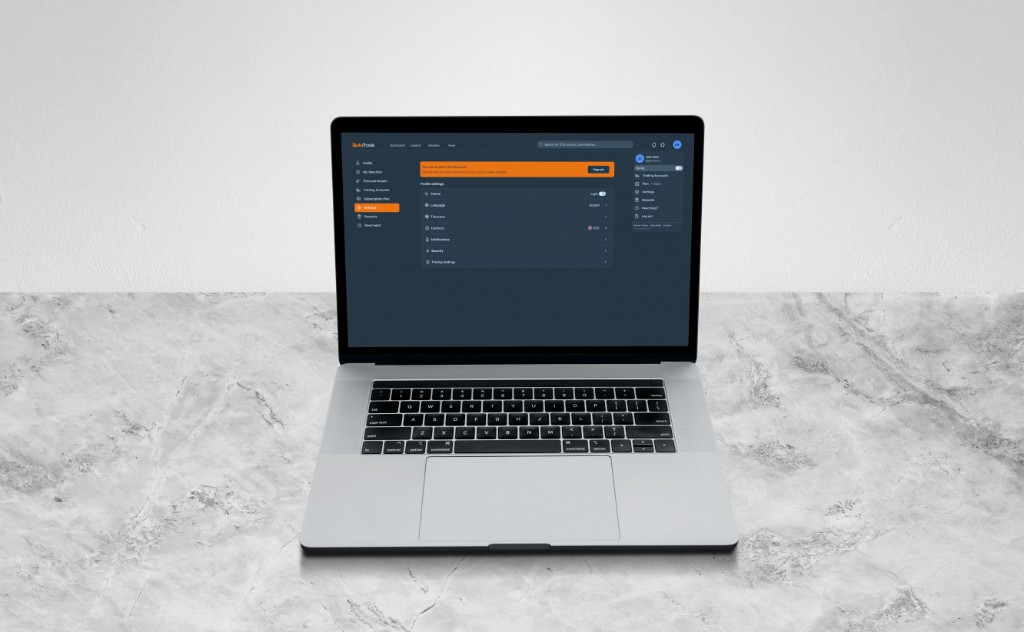
Underneath the screens, I built the first ZuluTrade design system. Foundations first, then structure, then only the components the real screens actually needed. I was learning what a design system was at the same time as building one, from articles, from videos, from studying tokens until they made sense. Learning the theory and using it in the same week is a stressful way to work. It is also the fastest.
Two decisions from that stretch say the most about it, and both were about restraint. The orange stayed. It had been ZuluTrade's colour since the beginning, one of the few things the brand genuinely owned, so I protected it instead of changing it for the sake of a fresh start. The logo did not stay. I found a real flaw in the existing logotype, so I reworked it into something cleaner and more modern that fit where the rest of the design was heading. Keep the orange, fix the logo. The whole job was knowing which was which.
I also started writing things down. There were no user stories and no documented flows, so I began building a single source of truth next to the system, the place where a decision and the reason behind it could actually be found. And because the team was small, the feedback loop ran straight to the top. I presented drafts to the new CEO and iterated with him directly, back and forth until we reached something we both trusted. As a junior, that was not a comfortable room. It was also the fastest way to learn what the business actually cared about.
Someone to talk to, finally
For most of this project, the hardest part was not the work. It was doing the work with no one to check it against. Every uncertain decision, I made alone, and then I lived with the uncertainty.
In the last three months, the company hired a senior designer. This is the part I am most grateful for, and it is not the heroic ending. By the time he arrived, the design system was there, and most of the app's screens and flows were built. He could pick the system up, understand it, and use it, which told me more about whether it was any good than all my own second-guessing had. We spent those months refining screens and flows together, and we worked well. He confirmed the things I had gotten right, caught the things I had not, and for the first time on that project I had someone to talk to. The work I had built alone held up in front of someone who knew more than I did. That is the closest thing to a verdict I got, and it was a good one.
What it left me with
ZuluTrade is not my favorite project, and I will not pretend it was. It is the hardest one, and the one where I had the least to work with. If you ask me what I would do differently, I do not have a clean answer, and I am not going to invent one to round the story off. Some projects teach you a tidy lesson. This one taught me that I could hold a product with almost nothing under me and not drop it.
There is one number I keep, because it was actually measured and not borrowed from a benchmark. Once the design system was in place, the time from design to development dropped by about half, because the developers could build from documented components instead of waiting on me for every screen. That is what a system is for. The number is the visible part. The point is that a junior with no system, no documentation, and for most of it no one to ask, built something a senior could walk into and use. I learned what to protect and what to change, how to argue for it, and how to keep going when there was no one to tell me I was right. I did not feel ready for any of it. That turned out to be beside the point.
Gallery
Outcomes